
Welcoming a new baby is an emotional mix of excitement, love and overwhelm. Between installing their car seat, reading books, setting up the nursery and imagining life with your newborn in your arms, there’s a lot to think about.
The good news is that some parts of those first days are designed to be simple and supportive, including your baby’s hearing screening. Understanding what to expect can help ease anxiety and give you one less thing to worry about during this special time.
Why Newborn Hearing Screenings Matter
In the first months and years of life, your baby’s brain is growing at an incredible pace. Hearing plays a significant role in how infants learn language, recognize voices and connect with the world around them. From your soothing words to the wind rushing through the trees in Pendleton King Park, your baby is constantly listening and learning.
That learning phase is why we recommend hearing screenings within the first month of life. Identifying hearing loss early allows families and providers to support healthy speech, language and social development right from the start.
What Happens During a Newborn Hearing Screening?
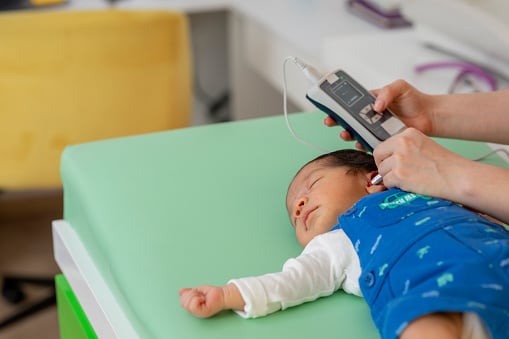
Over 98% of newborns undergo a hearing screening in the United States. Hearing screenings are safe, painless and usually done while your baby is calm or asleep. There are two standard screening methods, and your baby may receive one or both:
- Otoacoustic emissions (OAE). The OAE test looks at how the ear responds to sound. A quiet tone is played through a tiny earphone, and the ear’s response is recorded.
- Auditory brainstem response (ABR). This screening checks how the hearing nerve and brain respond to sound. Small earphones are placed on your baby’s ears, and soft electrodes, similar to stickers, rest gently on the head.
Follow-Up Steps if Your Child’s Screening Shows Hearing Loss
If a screening suggests possible hearing loss, it’s completely normal to feel worried. Please know that this is only the first step. A follow-up evaluation with a hearing specialist at Augusta – Aiken ENT & Allergy can confirm the results and guide you through the next steps.
Today’s hearing loss treatments, including hearing aids, cochlear implants and auditory training, can provide children with the help they need to thrive. Early hearing loss treatment supports communication, learning and confidence as your child grows.
Contact Augusta – Aiken ENT & Allergy with any questions or to schedule a follow-up hearing test.